Global AI Accelerator Market Breaks $250B in 2026: A Supply Chain Teardown
By 2026, AI accelerators have moved from niche hardware to the beating heart of modern compute, powering everything from frontier model training to real‑time inference across clouds, enterprises, and edge devices. Crossing the $250 billion mark in annual market value is not just a milestone; it is a reflection of a vast, intricate supply chain that stretches from design labs and fabs to packaging houses, board makers, system integrators, and the services that wrap around them. Understanding how this value is created and captured requires a teardown of the AI accelerator supply chain, layer by layer.

This article dissects the global AI accelerator market as it breaches $250B, focusing on where value pools sit, how different segments interact, and which bottlenecks and leverage points define the economics of AI hardware in 2026. It does not attempt to tally precise dollar amounts for each player, but rather to map the flow of technology and capital from concept to deployed silicon.
Defining the AI accelerator universe in 2026
The first step in a supply chain teardown is clarifying what counts as an AI accelerator. In 2026, the category is broader than a decade ago. It includes GPUs tuned for AI workloads, dedicated training and inference ASICs, AI‑optimized FPGAs, and increasingly, domain‑specific processors embedded in systems from servers to vehicles.
On the training side, accelerators focus on large‑scale parallel compute and high‑bandwidth memory support, targeting foundation models and high‑end enterprise workloads. On the inference side, accelerators span a spectrum from data‑center inference cards and appliances to edge chips in cameras, industrial equipment, and consumer devices.
This universe shares common traits: specialized hardware for matrix and tensor operations, tight integration with software stacks, and deployment patterns that treat AI compute as a distinct resource pool. The $250B figure reflects not just chip revenues, but also adjacent components and systems tightly tied to AI acceleration.
Design houses and IP: where architectures are born

At the top of the supply chain sit design houses and IP providers. They are responsible for defining architectures—core layouts, memory hierarchies, interconnect schemes, and instruction sets—that make accelerators effective for AI workloads.
Large integrated players design full chips: GPUs, training ASICs, inference processors, and domain‑specific accelerators. Fabless companies focus on logic design, relying on foundry partners for manufacturing. IP vendors contribute building blocks such as core IP, memory controllers, and interconnect IP, which are licensed into multiple designs.
Value creation at this stage comes from architectural innovation and ecosystem alignment. A successful accelerator design is not just fast; it is tuned for mainstream AI frameworks, supports efficient mixed‑precision arithmetic, and scales across clusters. Design houses capture a significant share of the overall value because they define the behavior of the silicon that downstream players will manufacture and integrate.
Foundries and manufacturing: turning designs into wafers
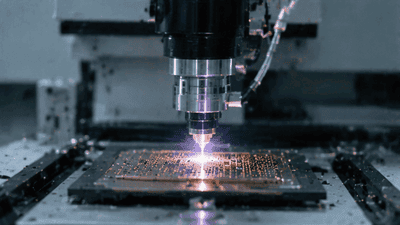
Once architectures are defined, the next critical stage is manufacturing. Leading foundries and specialized fabs take AI accelerator designs and turn them into wafers, often using advanced nodes for training‑grade devices and a mix of nodes for inference chips.
For high‑end training accelerators, the manufacturing challenge revolves around advanced lithography, yield management for large dies, and integration of high‑bandwidth memory stacks. These chips push the limits of process technology, making the foundry’s expertise and capacity a central bottleneck. The value captured by manufacturing is tied to wafer pricing, capacity utilization, and the ability to deliver consistent yields on complex designs.
Inference accelerators, especially those targeting edge or cost‑sensitive deployments, may use slightly older or more power‑efficient nodes, allowing broader participation from different fabs. However, as AI requirements rise even at the edge, process technology remains an important differentiator, and foundries that can balance cost and performance gain an advantage.
Across the board, foundries in 2026 act as gatekeepers: their capacity plans and node roadmaps influence how quickly the AI accelerator market can expand and how evenly growth is distributed across vendors.
Packaging, assembly, and test: the rise of advanced OSAT

After wafers are fabricated, packaging, assembly, and test convert bare dies into usable accelerators. In the AI era, this stage has grown far more complex and valuable than in traditional commodity chips.
High‑performance accelerators rely on advanced packaging techniques: 2.5D and 3D integration, high‑bandwidth memory stacks, chiplet‑based designs, and sophisticated thermal solutions. Outsourced semiconductor assembly and test (OSAT) providers that can handle these technologies become critical nodes in the supply chain.
Testing AI accelerators involves not only electrical validation but also functional and performance verification for AI workloads. Ensuring that chips meet timing, power, and reliability targets under realistic conditions is essential before they are shipped to system integrators.
Value at this stage is captured by OSAT players and in‑house packaging units that master advanced techniques and maintain high throughput. Their capabilities directly affect accelerator density, energy efficiency, and deployment reliability, making packaging and test a central link in the $250B chain rather than a peripheral service.
Boards, modules, and systems: integrating accelerators into hardware platforms
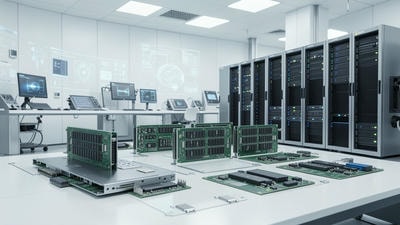
AI accelerators rarely operate alone; they are integrated into boards, modules, and full systems. This integration layer includes accelerator cards for servers, dedicated inference appliances, edge devices, and hybrid systems that combine CPUs, GPUs, ASICs, and networking components.
Board designers must manage power delivery, signal integrity, and thermal design around accelerators that often draw significant power and generate substantial heat. They also integrate memory, storage, and networking interfaces that allow accelerators to connect to broader infrastructure.
System integrators build complete platforms: AI servers with racks of accelerators, edge boxes for inference, and specialized hardware for verticals such as automotive or industrial control. Their value comes from packaging accelerators into usable products that customers can deploy with minimal hardware engineering.
In the $250B market, this layer captures substantial value, especially from customers who buy complete systems rather than chips alone. It also influences how accelerators are perceived: thermal and mechanical design, reliability, and ease of deployment are often judged at the system level.
Networking, memory, and power: the supporting cast that defines performance

No AI accelerator supply chain teardown is complete without acknowledging the supporting components that make accelerators effective. Three categories stand out: networking, memory, and power electronics.
Networking chips—switch ASICs, NICs, DPUs, and interconnect controllers—enable accelerators to talk to each other and to the rest of the data center. High‑bandwidth, low‑latency links are essential for scale‑out training and distributed inference. As AI clusters grow, spending on networking silicon tied to accelerators rises, representing a significant fraction of the total market.
Memory is equally central. High‑bandwidth memory for training, DDR and LPDDR for inference, and non‑volatile storage for model persistence form a layered hierarchy that feeds accelerators. Memory vendors capture value by supplying modules and stacks tuned for AI workloads, with emphasis on bandwidth, capacity, and reliability.
Power electronics—regulators, converters, and distribution systems—ensure that accelerators receive stable power at high densities. As AI systems push power envelopes, precision power management and efficient conversion become more important, creating specialized value pools for power‑focused semiconductor firms.
This supporting cast does not always appear under “AI accelerator” revenue lines, but their growth is tightly coupled to accelerators. In a supply chain teardown, they collectively represent a large and growing share of the total economic footprint.
Software, firmware, and tools: invisible but indispensable
Although the $250B figure primarily refers to hardware, AI accelerators cannot be understood without their software and tooling layers. Firmware, drivers, compilers, runtime libraries, and orchestration tools are as critical to the supply chain as physical components.
Accelerator vendors invest heavily in software stacks that expose their hardware capabilities to developers. Framework integrations, optimized kernels, quantization and compression tools, and monitoring utilities all lower the barrier to adoption and improve performance.
Third‑party tools and platforms contribute as well, providing abstraction layers that allow customers to target multiple accelerator types or manage distributed clusters without handling low‑level details. In many cases, software offerings are bundled with hardware, blurring revenue categories but clearly influencing hardware demand.
While this layer may not be tallied as semiconductor revenue, it deserves a place in the teardown because it shapes how value is captured. Companies that pair strong hardware with rich software ecosystems can command premiums and sustain customer loyalty, amplifying the economic impact of their accelerators.
Cloud providers, OEMs, and hyperscalers: demand shapers and co‑design partners
On the demand side, cloud providers, OEMs, and hyperscalers act as both customers and co‑design partners for AI accelerators. Their requirements and purchasing decisions ripple through the supply chain.
Cloud platforms deploy large fleets of accelerators for training and inference services. They influence chip design by requesting features that match their architectures—memory configurations, interconnect schemes, security features, and telemetry. In many cases, they collaborate with vendors on semi‑custom products tailored to their needs.
OEMs integrate accelerators into servers, appliances, and edge devices, serving enterprise customers who prefer turnkey solutions. Their integration and support capabilities affect how easily accelerators reach broader markets beyond early adopters.
Hyperscalers and major AI players also shape supply chain resilience. Their demand forecasts and capacity commitments give foundries and OSAT providers confidence to invest in new lines and technologies. At the same time, concentration of demand among a few large buyers can introduce risk for smaller players in the chain.
In a $250B market, these demand shapers are essential actors in the teardown. They may not manufacture chips themselves, but their strategies and contracts heavily determine where and how value is realized.
Bottlenecks and leverage points in the AI accelerator supply chain
A supply chain teardown must highlight where bottlenecks emerge and which segments have outsized leverage over the rest. In the AI accelerator ecosystem, several points stand out.
Advanced node capacity is a major bottleneck. Training accelerators and some high‑end inference chips rely on cutting‑edge process technologies. Limited capacity at these nodes can constrain supply, drive up prices, and force prioritization among customers.
Advanced packaging is another constraint. As more accelerators adopt complex packaging, the capacity and capability of OSAT providers become critical. Shortages or technical challenges in packaging can delay product launches and impact performance.
Networking silicon and high‑bandwidth memory also serve as leverage points. Even if accelerators are available, insufficient supply of associated networking chips or memory can limit effective deployment. Vendors in these segments can command significant value when demand for their components outstrips supply.
Finally, software ecosystems can become bottlenecks when developer support and optimization lag hardware capabilities. Accelerators that lack mature tooling may see slower adoption despite strong technical specs, giving ecosystem‑rich players leverage over those with weaker software stories.
Regional dynamics and resilience in the $250B market
Geographic distribution of supply chain stages shapes resilience and risk in the AI accelerator market. Design centers, foundries, OSAT facilities, and system integrators are spread across multiple regions, each with distinct policy environments and strengths.
Leading‑edge manufacturing and packaging clusters in parts of Asia serve as hubs for the most advanced accelerators. Design hubs in North America, Europe, and Asia contribute architectures and software ecosystems. Regional OSAT and board producers support localized integration for edge and vertical deployments.
Policy initiatives around chip sovereignty and localization influence where capacity is added and how supply chains are structured. As AI accelerators become critical infrastructure, governments pay more attention to where the supply chain’s choke points lie and how domestic industries can participate.
In this context, the $250B market is not just a global aggregate; it is a patchwork of regional ecosystems that must interoperate while navigating trade, regulation, and strategic concerns. A teardown that ignores regional dynamics misses key aspects of how value and risk are distributed.
Looking ahead: how the AI accelerator supply chain may evolve beyond 2026
Breaking $250B is a snapshot in time, but the AI accelerator supply chain will continue to evolve. Several trends suggest how future teardowns might look different.
Chiplet‑based designs and more modular architectures may reshape manufacturing and packaging, creating new roles for integrators who assemble heterogeneous components. This could alter value distribution between design houses, foundries, and OSAT providers.
More specialization in inference accelerators, including domain‑specific chips for automotive, industrial, and consumer devices, may broaden the base of vendors and expand edge‑focused supply chains distinct from data‑center‑centric ones.
As sustainability pressures grow, segments focused on energy‑efficient components—power electronics, cooling solutions, and efficient memory—may capture a larger portion of overall value and attention.
On the software side, abstraction layers that hide hardware differences while still enabling performance optimization could change how much differentiation is driven by hardware versus platform capabilities.
These shifts will redefine which parts of the chain are seen as strategic and which are treated as commodities, influencing where future investment and innovation concentrate.
Conclusion: the $250B AI accelerator market as a system of systems
The global AI accelerator market breaking $250B in 2026 is best understood as a system of systems: a layered, interconnected network of design houses, foundries, OSAT providers, component vendors, system integrators, and software ecosystems. Each layer adds value, and bottlenecks or innovation at any point ripple through the rest.
A supply chain teardown reveals that AI accelerators are far more than isolated chips. They are the focal points of a broad hardware and software apparatus that together enables AI at scale. For participants across this apparatus, the opportunities and risks of the AI era hinge not only on what happens inside the accelerator die, but on how effectively the entire chain is orchestrated to deliver performant, reliable, and economically viable AI compute to the world.